Southeast Asia route

Shipping from China to Thailand

Typical shipping from China to Thailand takes 3–11 days port to port by ocean on direct intra-Asia services — OOCL’s VCST rotation publishes Nansha–Laem Chabang at 3 days and Ningbo at 7, the Shanghai express string launched in January 2026 also runs 7 days, and ONE’s TVH and CVT strings publish Nansha and Shekou at 4, Ningbo at 5 and Shanghai at 11 — with door-to-door LCL at 23–38 days and air freight at 1–2 days airport to airport into Bangkok. Thailand abolished its 1,500-baht de minimis exemption from 1 January 2026, so every import is taxed from the first baht: e-commerce brackets run up to 30% duty plus 7% VAT on CIF plus duty, while an original ACFTA Form E can bring normal-track goods to 0%. A Thai-registered importer with a customs registration number is required — a foreign seller cannot clear directly.

Ocean, air and express options for commercial cargo moving from China to Thailand.

Looking for the destination side of this lane — duty, importer of record and certification? Open the Thailand destination guide.

How long does shipping from China take?

ModeTypical timeBasis
Ocean freight FCL3–11 daysPort to port on direct services (OOCL VCST: Nansha–Laem Chabang 3 days, Ningbo 7; the Shanghai express string also runs 7; ONE TVH/CVT: Nansha and Shekou 4, Ningbo 5, Shanghai 11)
Ocean freight LCL23–38 daysDoor-to-door on current forwarder tables — 23–35 days from South China, 25–38 from Shanghai and Ningbo
Air freight1–2 daysAirport to airport to Suvarnabhumi; consolidated door-to-door air runs 4–7 days
Express courier2–4 daysIndicative forwarder range door-to-door to Bangkok; carrier-published transit is confirmed with the booking

Typical ranges measured from supplier pickup to signed delivery. They are not a commitment; the binding range is issued with your quotation.

Lane facts

Loading fromNansha, Ningbo and Shanghai on direct strings; Yantian via feeder or direct intra-Asia calls
Destination portsLaem Chabang (the main deep-sea gateway), Bangkok Port at Khlong Toei, Map Ta Phut
Direct sailingsDirect weekly intra-Asia rotations including OOCL VCST and KTX2; Maersk TP6 calls Laem Chabang directly since March 2026
Container options20GP, 40GP and 40HQ; LCL accepted from 1 CBM
Duty and taxMFN duty of 5–30% on most goods (up to 80% by line) plus 7% VAT on CIF plus duty; anti-dumping duties of 2.76–69.35% apply to listed Chinese goods
De minimisAbolished from 1 January 2026 — every import is taxed from the first baht, with e-commerce brackets up to 30%
FTA preferenceAn original ACFTA Form E can bring normal-track goods to 0% duty; a missing or defective Form E falls back to the MFN rate
Importer of recordA Thai-registered entity with a customs registration number — a foreign seller cannot clear directly
CertificationTISI mark for electrical goods and toys, NBTC type approval for radio equipment, Thai FDA registration for food and cosmetics, DIW for hazardous substances
Quote turnaroundA formal quotation is issued within one hour once the cargo details are complete

What does this cover?

Thailand is a short, reliable intra-Asia lane: direct services call Laem Chabang and Bangkok, and the air option into Suvarnabhumi moves urgent cargo in days. The compliance question is usually TISI licensing and the ACFTA certificate of origin, not the transit.

Who is this for?

  • Commercial imports for wholesale, retail and distribution
  • Factory-to-buyer shipments arranged on a delivered or port-to-port basis
  • Consolidated cargo from several Chinese suppliers
  • Buyers who need a duty-paid door price rather than a port-to-port rate

What is included in the service?

  • China pickup, consolidation and warehouse handling where the scope includes it
  • The transport combination quoted — ocean, rail, road, air or express
  • Export declaration and shipping document guidance
  • Destination clearance under the confirmed arrangement where a door scope is quoted
  • Delivery to the agreed address within the quoted delivery area

What do you need from us to quote?

  • Product name, material, use and photographs
  • Declared value with currency and whether the goods carry a brand
  • Piece count, gross weight, volume and package dimensions
  • China origin city or the supplier address
  • Destination city, full address and postcode
  • Address type: commercial, residential, warehouse or free zone
  • Whether the consignee can act as importer of record if the destination requires it
  • Any battery, liquid, powder, magnet or regulated attribute
  • Cargo-ready date and any required delivery window

Who is responsible for what?

ScopeCompanyCustomerResponsibility transfers
Door to door
  • Pickup from the agreed origin address
  • Warehouse intake, checking and measurement
  • Export declaration and main transport
  • Destination delivery to the agreed address, with the customs arrangement stated in the quotation
  • Providing accurate cargo, supplier and consignee details
  • Duty and tax if the quotation states they are not included
  • Ensuring the delivery address can accept the shipment
  • Confirming the final charges before dispatch
Responsibility passes on delivery and signature at the agreed destination address.

What does the quotation cover?

The quotation states the total for the scope described in it. It is built from the cargo data, the origin and destination, the transport mode and the delivery scope agreed at that time.

What is included?

  • China pickup and consolidation as quoted
  • Export declaration and main transport on the quoted routing
  • Destination import clearance under the confirmed arrangement
  • Duty and tax for the declared goods where the scope is DDP
  • Delivery to the agreed address within the quoted delivery area

What is not included?

  • Customs revaluation where the declared value is not accepted
  • Certification, registration or testing required by the destination authority
  • Storage, demurrage and inspection costs arising at either customs point
  • Remote-area delivery outside the quoted area
  • Unloading equipment or labour at the destination address

What might cost extra?

  • Remote or difficult-access delivery beyond the standard service area
  • Customs inspection, holds or revaluation at either end
  • Storage where cargo cannot be dispatched inside the agreed free period
  • Detention and demurrage when a container or vehicle is held beyond free time
  • Oversized, overweight or special loading equipment
  • Cargo that arrives without the documents required for the confirmed route
  • Special cargo approved after review but requiring extra handling or documentation
  • Address change, re-delivery or a failed delivery appointment after dispatch
  • Peak-season or fuel surcharges applied by the carrier
  • Duty or tax reassessment where customs does not accept the declared value

Freight rates and space change with the market, so each quotation carries its own validity period. Once it expires, or if the rate or space changes before booking, the price is reconfirmed before dispatch.

Cargo is weighed and measured after it reaches the warehouse. If the piece count, weight, volume, packing, cargo attributes or delivery address differ from the original inquiry, the charge is recalculated and sent to you for confirmation before payment and dispatch.

How long does each stage take?

Transit is counted from the stated start point to the stated end point for each stage. Carrier schedules, port and customs conditions, and the destination delivery arrangement all affect the outcome.

  • Pickup and warehouse intake: Typically 1–3 days from supplier release (calculated from Pickup arranged from the supplier address to Cargo received, counted, weighed and measured at the warehouse)
  • Consolidation and waiting: Typically 2–5 days, longer if later suppliers are still producing (calculated from Cargo accepted at the warehouse to Container loaded and sealed, or cargo handed to the carrier)
  • Export and ocean transit: Typically 3–11 days port to port to Laem Chabang on direct services, by origin (calculated from Container loaded on board to Vessel arriving at the destination port)
  • Import clearance and duty handling: e-Customs lodgement is mandatory pre-arrival; air clearance at Suvarnabhumi runs 1–3 working days and ocean clearance is confirmed with the terminal (calculated from Vessel arrival at the destination port to Customs released and duty or tax settled where the scope includes it)
  • Final delivery: Typically 1–3 days around Bangkok and the Eastern Economic Corridor (calculated from Customs released to Delivered to the agreed address and signed for)

Estimated total: An estimated total is issued with the quotation, expressed as a range with the calculation start and end points stated. It is an estimate, not a guaranteed arrival date.

Last verified 2026-09-15.

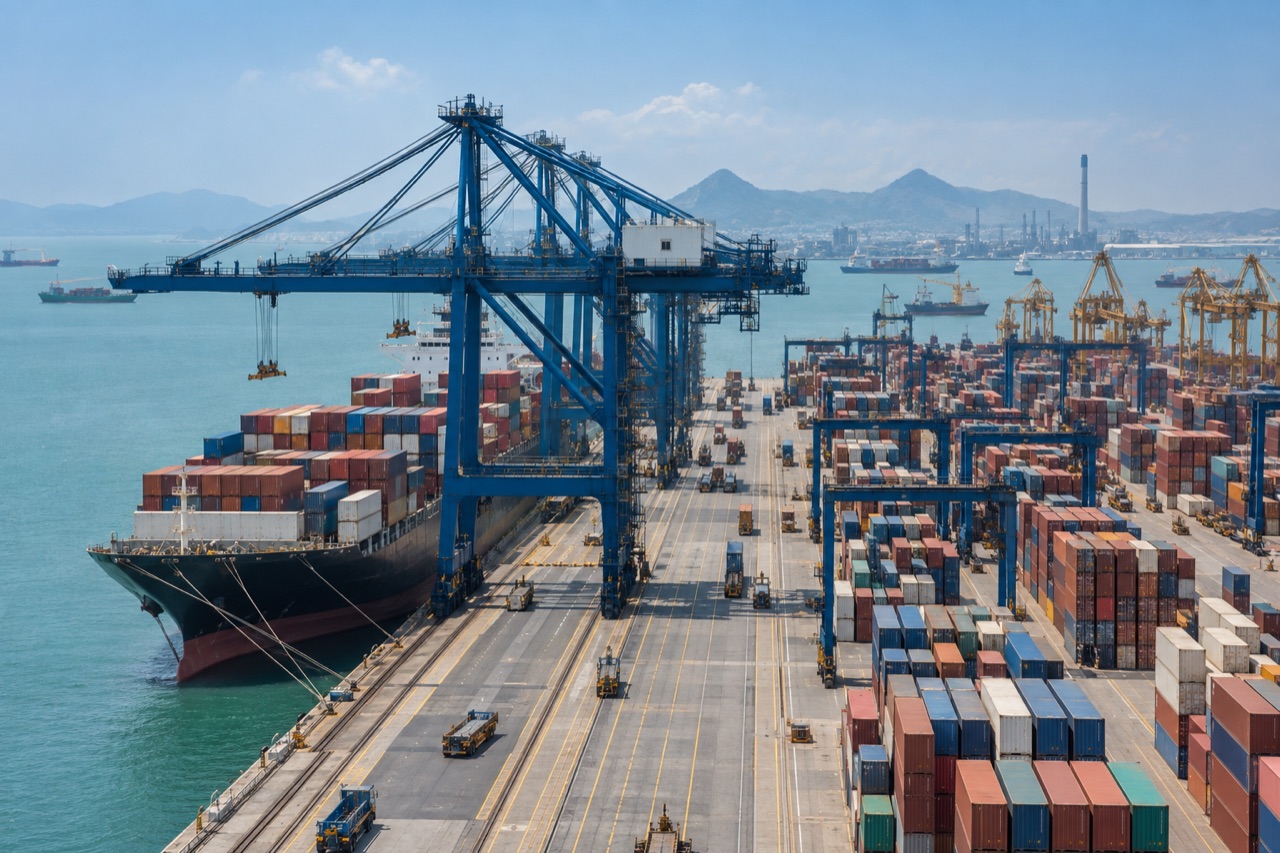
How is the shipment handled?

Illustrations generated for this page, showing the handling stages your cargo moves through. They are not photographs of a specific shipment.

What must be confirmed before booking?

  • DDP is only quoted where a Thai-registered importer of record with a customs registration number is confirmed before shipment
  • Thailand taxes every import from the first baht since 1 January 2026 — there is no low-value exemption to plan around
  • Anti-dumping duties on listed Chinese goods run from 2.76% to 69.35% and are levied before VAT; the HS code is checked before quoting
  • TISI, NBTC, Thai FDA and DIW registrations are product-specific and confirmed from the product details
  • Songkran (13–15 April) halts customs and ports and typically adds 3–5 days

What mistakes should we avoid?

  • Planning around the old 1,500-baht exemption — Thailand abolished it on 1 January 2026
  • Assuming ACFTA 0% duty without the original Form E — a defective form falls back to the MFN rate
  • Leaving TISI or NBTC approval until the cargo arrives in Laem Chabang
  • Forgetting anti-dumping duty on listed Chinese goods when comparing landed costs
Questions

What else do buyers ask?

Can you combine goods from multiple suppliers?

Yes. We receive goods from several suppliers, register each delivery separately, check piece counts and outer packing, and consolidate everything into one shipment that you release once the last supplier has delivered.

Consolidation means one export declaration, one main transport movement and one delivered scope instead of several separate shipments. The shipment is held until you confirm that all suppliers have delivered.

Can I track the shipment?

Yes. Warehouse data and shipment progress can be queried through our system, and your service representative provides updates and handles exceptions.

Tracking visibility can cover warehouse receipt, booking, dispatch, international transit, customs clearance, delivery and receipt. Standard warehouse records include arrival photographs, while dedicated inspection reports and specified-angle filming are value-added services.

Is DDP available for every country and every product?

No. DDP is available where a compliant import arrangement can be built for that country and that commodity, which is confirmed per shipment. Where it cannot, an alternative such as DDU is quoted instead.

Some destinations do not allow an overseas seller to complete import and tax formalities, and some commodities need registration or certification before they can be imported at all. We confirm the importer-of-record position and the duty treatment for each shipment instead of promising universal DDP coverage.

How long does shipping from China take?

Typical door-to-door transit from China is 25–35 days by ocean FCL and 25–38 days by LCL to the UAE, 25–35 days by FCL to Saudi Arabia, 35–45 days by FCL to the United Kingdom, and 25–35 days by FCL to the US West Coast or 35–50 days to the East Coast; air freight typically takes 4–12 days door to door and express courier 3–6 working days. These are typical ranges, not a commitment; the confirmed range is issued with your quotation.

The ranges above are measured door to door and cover five stages: pickup and warehouse intake, consolidation and waiting, international transport, import clearance and duty handling, and final delivery. Ocean transit between the ports themselves is only one part of the total, which is why a port-to-port figure cannot be read as a door-to-door timeline. Sailing schedules, carrier space, port congestion and customs conditions can all extend the outcome, so the quotation states a range with its calculation start and end points rather than a guaranteed arrival date.

Why is one quote much cheaper than another?

The most common reason is that the two quotes do not cover the same thing. Check whether pickup, export, freight, destination charges, duty, tax and delivery are each included before comparing the totals.

A port-to-port rate excludes import clearance, duty, destination terminal charges and onward transport, while a delivered price includes them. Chargeable weight or volume may also be calculated differently between quotes, so a lower headline figure often means a smaller scope rather than a cheaper service.

When do I pay, and when does the cargo leave?

The standard sequence is: cargo arrives and is measured, the final charge is confirmed with you, you approve and pay, and then the shipment is dispatched.

Cargo is received and measured first, so the charge you approve is based on actual data rather than a declaration. Credit terms, monthly settlement or staged payment can be discussed for established and project customers, and every payment is recorded against a company order.

What happens if the cargo is damaged, delayed or goes missing?

We notify you as soon as an issue is confirmed, state the impact, give you the options, and keep updating until it is resolved. Responsibility and compensation are then determined by the cause, the contract terms and the insurance position.

We do not promise unconditional compensation for every loss. Claims depend on where responsibility sat at the time, what the contract says and whether insurance was in place, so we recommend confirming the insurance position for each shipment before dispatch.

Can you guarantee a fixed transit time?

No. We do not guarantee a fixed arrival date. Transit is issued as an estimated range with its calculation basis, and carrier schedules, port and customs conditions and delivery arrangements can all extend it.

We state the calculation basis and the factors that can extend transit, and where a route is exposed to a known risk we plan a primary and an alternative option instead of promising a date.

Is the $800 de minimis exemption still available for US imports?

No. Duty-free de minimis treatment for imports under $800 has been suspended for all countries since 29 August 2025, so commercial shipments now require a customs entry and payment of applicable duty regardless of value.

A US shipment can therefore no longer be treated as a small parcel exempt from duty. Every entry needs an importer of record and a customs bond, and duty together with MPF and HMF is assessed on that entry.

Do I need a US importer of record and a customs bond?

Yes. Clearing goods into the United States requires an importer of record and a customs bond covering the entry, and the position is confirmed before booking. Where a compliant arrangement exists we quote DDP; where it does not, we quote DDU.

A customs bond is a financial guarantee to CBP rather than an insurance policy, and it can be continuous or single-entry. The quotation states which party imports and what the DDP price includes, so the responsibility is visible before the cargo ships.

Can you deliver to Amazon FBA warehouses and residential addresses?

Yes. We deliver to Amazon FBA and AWD warehouses, third-party fulfilment centres, commercial premises and residential addresses across all 50 states, provided the delivery appointment and labelling requirements are met.

Marketplace deliveries need the shipment plan, labels and appointment in place before the truck arrives. Storage, waiting time or rescheduling charges raised by the facility fall outside the standard quoted scope, and residential or remote addresses are confirmed before dispatch.

Does Thailand still have a duty-free threshold for small parcels?

No. Thai Customs abolished the 1,500-baht exemption from 1 January 2026, so cross-border purchases are taxed from the first baht. The published e-commerce brackets run up to 30% duty for fashion and footwear, 20% for bags and accessories and 10% for electrical goods, plus 7% VAT on CIF plus duty — commercial cargo is assessed by HS line as before.

The 1,500-baht exemption ended on 1 January 2026; every import is taxed from the first baht.

How does ACFTA reduce duty on goods from China?

With an original Form E certificate of origin, normal-track goods under the ASEAN–China FTA can enter Thailand at 0% duty; a missing, defective or non-original Form E falls back to the full MFN rate for that line. Because anti-dumping duties on listed Chinese goods (2.76–69.35%) are levied before VAT regardless of FTA preference, we check the tariff line and the origin paperwork before quoting a duty-paid price.

An original ACFTA Form E can bring normal-track goods to 0%; anti-dumping duty still applies to listed goods.

Need a shipment-level answer?

Send the cargo details, origin, destination and preferred delivery scope for review.

Start your inquiry
WhatsApp us