Africa route

Shipping from China to Kenya

Typical shipping from China to Kenya takes 15–25 days port to port by ocean to Mombasa on direct weekly services — ONE’s EA3 string publishes Nansha at 15 days, Ningbo at 17 and Shanghai at 19, Maersk’s Mashariki Express puts Shanghai at 22, Ningbo at 21 and Nansha at 17, and CMA CGM’s KILIMA runs weekly alongside — with direct Guangzhou–Nairobi air freight at about eleven and a half hours block time and 2–4 days airport to airport in practice. LCL and express door-to-door ranges are confirmed per shipment: no carrier-published tables were available to quote. Duty runs 0/10/25/35% under the EAC common external tariff plus 16% VAT on CIF and duty, with a 2.5% import declaration fee and a 2% railway development levy, and a KEBS Certificate of Conformity from pre-shipment inspection (PVoC, run by CCIC in China) is required before shipment.

Ocean, air and door-delivery combinations for commercial cargo moving from China to Kenya.

Looking for the destination side of this lane — duty, importer of record and certification? Open the Kenya destination guide.

How long does shipping from China take?

ModeTypical timeBasis
Ocean freight FCL15–25 daysPort to port to Mombasa on direct weekly services: ONE EA3 publishes Nansha 15 days, Ningbo 17, Shanghai 19; Maersk Mashariki has Shanghai 22, Ningbo 21, Nansha 17
Ocean freight LCLConfirmed per shipmentConsolidation to Mombasa quoted per booking
Air freight2–4 daysAirport to airport to Nairobi; China Southern flies Guangzhou–Nairobi direct at about eleven and a half hours block time
Express courierConfirmed per shipmentCarrier sites publish no readable transit for Kenya; confirmed with the booking

Typical ranges measured from supplier pickup to signed delivery. They are not a commitment; the binding range is issued with your quotation.

Lane facts

Loading fromShanghai, Ningbo and Nansha on the direct weekly rotation; other South China origins confirmed per booking
Destination portsMombasa (Kilindini) is the gateway; Lamu takes transshipment under the 2026 KRA/KPA port reforms
Direct sailingsMaersk Mashariki Express weekly (Singapore and Tanjung Pelepas as en-route calls) and CMA CGM KILIMA weekly since August 2025
Container options20GP, 40GP and 40HQ; LCL accepted from 1 CBM
Duty and taxEAC common external tariff of 0/10/25/35% by HS line with 50–100% on sensitive goods; VAT 16% on CIF plus duty
Import leviesImport declaration fee 2.5% and railway development levy 2% of customs value — 1.5%/1.5% for approved manufacturers’ inputs
Pre-shipment inspectionA KEBS Certificate of Conformity from PVoC inspection is mandatory, issued in China by CCIC before departure
Importer of recordA KRA-registered importer declares through a licensed clearing agent on the SIMBA portal
Inland deliverySGR rail links Mombasa to the Nairobi and Naivasha inland container depots
Quote turnaroundA formal quotation is issued within one hour once the cargo details are complete

What does this cover?

Kenya is served by direct and transhipment ocean services into Mombasa, with rail and road links to Nairobi and the western corridor. We confirm the routing and the PVoC arrangement before the cargo sails, because the certificate cannot be issued after arrival.

Who is this for?

  • Commercial imports for wholesale, retail and distribution
  • Factory-to-buyer shipments arranged on a delivered or port-to-port basis
  • Consolidated cargo from several Chinese suppliers
  • Buyers who need a duty-paid door price rather than a port-to-port rate

What is included in the service?

  • China pickup, consolidation and warehouse handling where the scope includes it
  • The transport combination quoted — ocean, rail, road, air or express
  • Export declaration and shipping document guidance
  • Destination clearance under the confirmed arrangement where a door scope is quoted
  • Delivery to the agreed address within the quoted delivery area

What do you need from us to quote?

  • Product name, material, use and photographs
  • Declared value with currency and whether the goods carry a brand
  • Piece count, gross weight, volume and package dimensions
  • China origin city or the supplier address
  • Destination city, full address and postcode
  • Address type: commercial, residential, warehouse or free zone
  • Whether the consignee can act as importer of record if the destination requires it
  • Any battery, liquid, powder, magnet or regulated attribute
  • Cargo-ready date and any required delivery window

Who is responsible for what?

ScopeCompanyCustomerResponsibility transfers
Door to door
  • Pickup from the agreed origin address
  • Warehouse intake, checking and measurement
  • Export declaration and main transport
  • Destination delivery to the agreed address, with the customs arrangement stated in the quotation
  • Providing accurate cargo, supplier and consignee details
  • Duty and tax if the quotation states they are not included
  • Ensuring the delivery address can accept the shipment
  • Confirming the final charges before dispatch
Responsibility passes on delivery and signature at the agreed destination address.

What does the quotation cover?

The quotation states the total for the scope described in it. It is built from the cargo data, the origin and destination, the transport mode and the delivery scope agreed at that time.

What is included?

  • China pickup and consolidation as quoted
  • Export declaration and main transport on the quoted routing
  • Destination import clearance under the confirmed arrangement
  • Duty and tax for the declared goods where the scope is DDP
  • Delivery to the agreed address within the quoted delivery area

What is not included?

  • Customs revaluation where the declared value is not accepted
  • Certification, registration or testing required by the destination authority
  • Storage, demurrage and inspection costs arising at either customs point
  • Remote-area delivery outside the quoted area
  • Unloading equipment or labour at the destination address

What might cost extra?

  • Remote or difficult-access delivery beyond the standard service area
  • Customs inspection, holds or revaluation at either end
  • Storage where cargo cannot be dispatched inside the agreed free period
  • Detention and demurrage when a container or vehicle is held beyond free time
  • Oversized, overweight or special loading equipment
  • Cargo that arrives without the documents required for the confirmed route
  • Special cargo approved after review but requiring extra handling or documentation
  • Address change, re-delivery or a failed delivery appointment after dispatch
  • Peak-season or fuel surcharges applied by the carrier
  • Duty or tax reassessment where customs does not accept the declared value

Freight rates and space change with the market, so each quotation carries its own validity period. Once it expires, or if the rate or space changes before booking, the price is reconfirmed before dispatch.

Cargo is weighed and measured after it reaches the warehouse. If the piece count, weight, volume, packing, cargo attributes or delivery address differ from the original inquiry, the charge is recalculated and sent to you for confirmation before payment and dispatch.

How long does each stage take?

Transit is counted from the stated start point to the stated end point for each stage. Carrier schedules, port and customs conditions, and the destination delivery arrangement all affect the outcome.

  • Pickup and warehouse intake: Typically 1–3 days from supplier release (calculated from Pickup arranged from the supplier address to Cargo received, counted, weighed and measured at the warehouse)
  • Consolidation and waiting: Typically 2–5 days, longer if later suppliers are still producing (calculated from Cargo accepted at the warehouse to Container loaded and sealed, or cargo handed to the carrier)
  • Export and ocean transit: Typically 15–25 days port to port to Mombasa on the direct weekly services (calculated from Container loaded on board to Vessel arriving at the destination port)
  • Import clearance and duty handling: Pre-arrival processing is expanding under the 2026 port reforms and cargo dwelling over 21 days moves to CFS yards; clearance is confirmed with the terminal (calculated from Vessel arrival at the destination port to Customs released and duty or tax settled where the scope includes it)
  • Final delivery: Typically 1–3 days in Nairobi via SGR rail or road from Mombasa (calculated from Customs released to Delivered to the agreed address and signed for)

Estimated total: An estimated total is issued with the quotation, expressed as a range with the calculation start and end points stated. It is an estimate, not a guaranteed arrival date.

Last verified 2026-09-15.

How is the shipment handled?

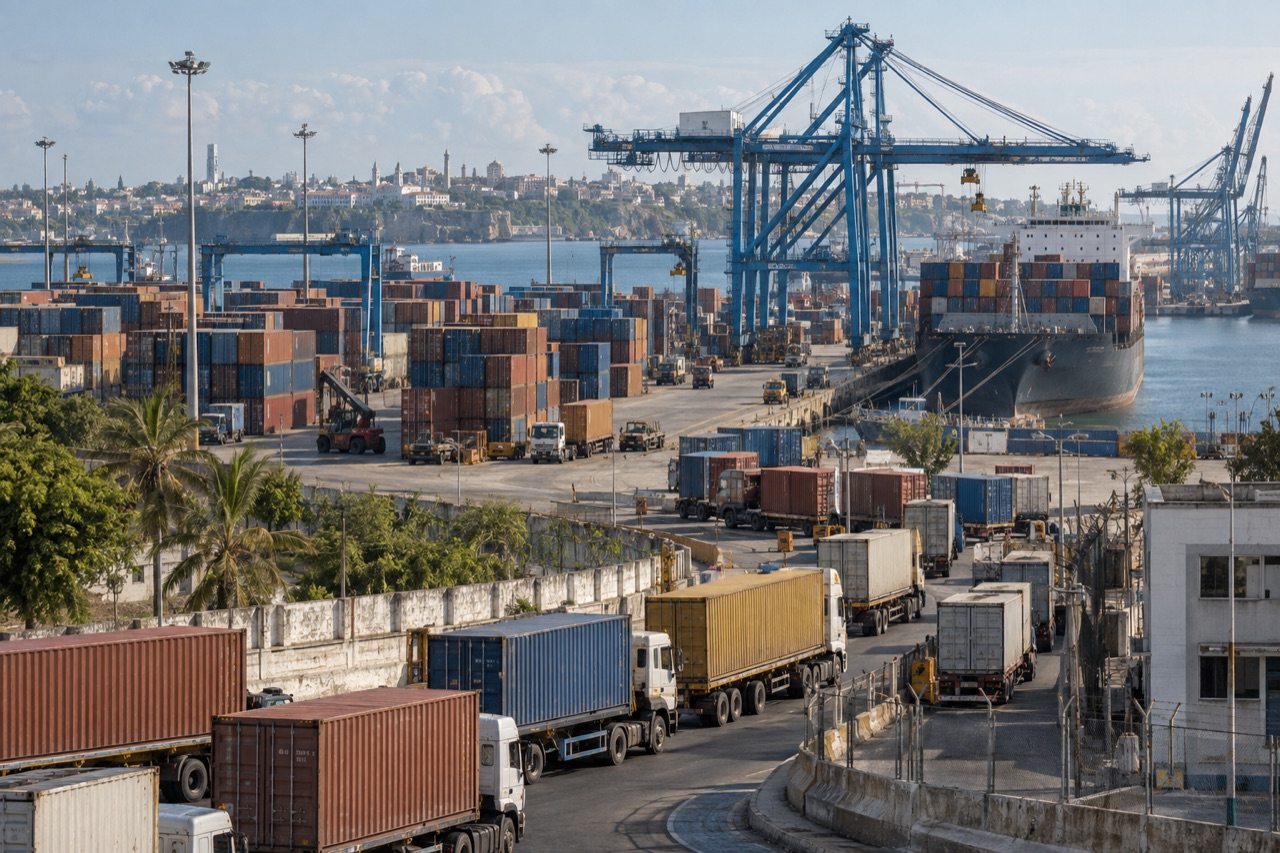
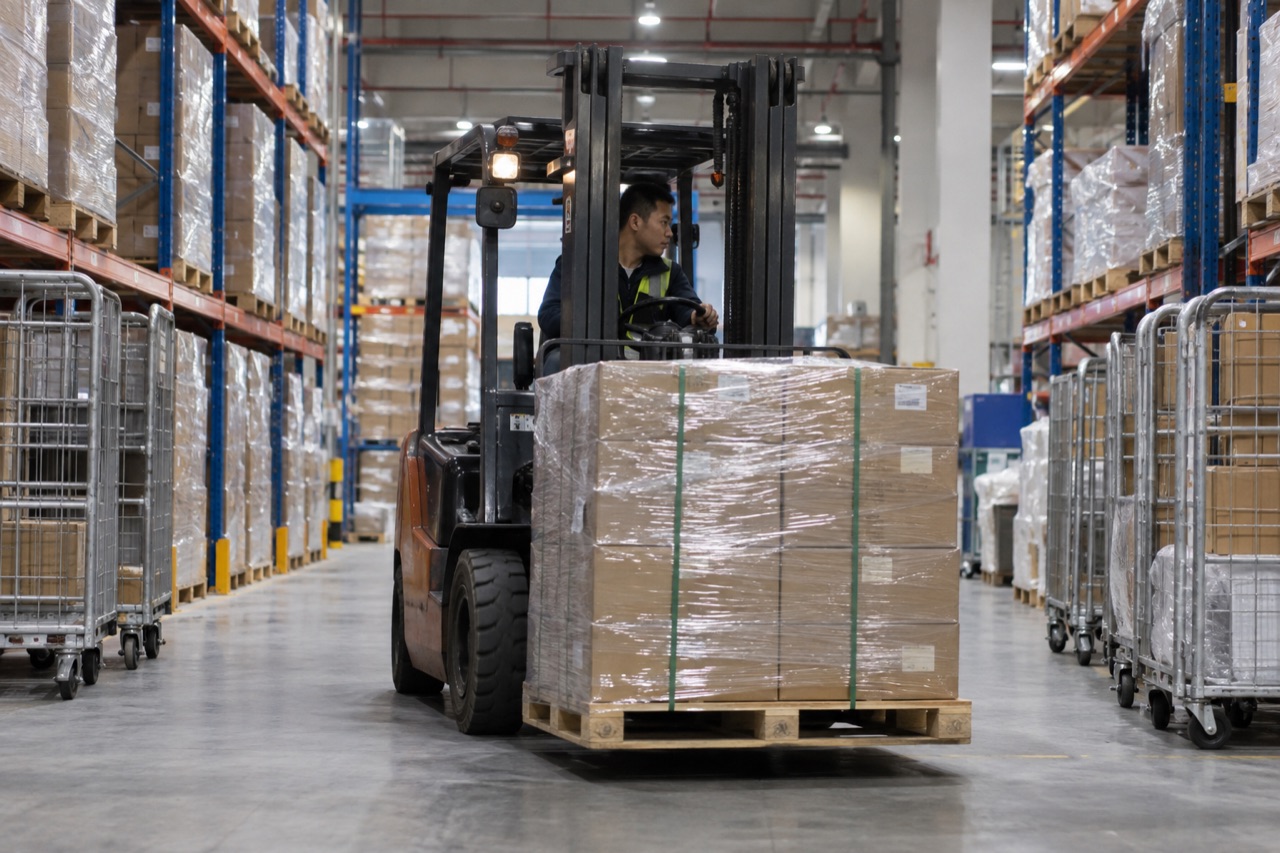
Illustrations generated for this page, showing the handling stages your cargo moves through. They are not photographs of a specific shipment.
What must be confirmed before booking?

  • A KEBS Certificate of Conformity from PVoC inspection (CCIC in China) must be issued before the cargo sails — goods without it are refused at destination
  • Duty is set by the EAC common external tariff line by line; sensitive goods run 50–100%
  • LCL, express and door-to-door air ranges are confirmed per shipment — no carrier-published tables exist to quote
  • The import declaration fee of 2.5% and the railway development levy of 2% apply on top of duty and VAT
  • Storage after the free days at Mombasa falls outside the quoted scope, and long-dwell cargo moves to CFS yards under the 2026 reforms

What mistakes should we avoid?

  • Shipping without the KEBS PVoC Certificate of Conformity and expecting to clear at Mombasa
  • Budgeting only duty and VAT — the 2.5% import declaration fee and 2% railway development levy add to landed cost
  • Ignoring the 2026 port reforms — cargo dwelling over 21 days now moves to CFS yards
  • Assuming any bill of lading clears itself — Kenya’s SIMBA declarations require a licensed clearing agent
Questions

What else do buyers ask?

Can you combine goods from multiple suppliers?

Yes. We receive goods from several suppliers, register each delivery separately, check piece counts and outer packing, and consolidate everything into one shipment that you release once the last supplier has delivered.

Consolidation means one export declaration, one main transport movement and one delivered scope instead of several separate shipments. The shipment is held until you confirm that all suppliers have delivered.

Can I track the shipment?

Yes. Warehouse data and shipment progress can be queried through our system, and your service representative provides updates and handles exceptions.

Tracking visibility can cover warehouse receipt, booking, dispatch, international transit, customs clearance, delivery and receipt. Standard warehouse records include arrival photographs, while dedicated inspection reports and specified-angle filming are value-added services.

Is DDP available for every country and every product?

No. DDP is available where a compliant import arrangement can be built for that country and that commodity, which is confirmed per shipment. Where it cannot, an alternative such as DDU is quoted instead.

Some destinations do not allow an overseas seller to complete import and tax formalities, and some commodities need registration or certification before they can be imported at all. We confirm the importer-of-record position and the duty treatment for each shipment instead of promising universal DDP coverage.

How long does shipping from China take?

Typical door-to-door transit from China is 25–35 days by ocean FCL and 25–38 days by LCL to the UAE, 25–35 days by FCL to Saudi Arabia, 35–45 days by FCL to the United Kingdom, and 25–35 days by FCL to the US West Coast or 35–50 days to the East Coast; air freight typically takes 4–12 days door to door and express courier 3–6 working days. These are typical ranges, not a commitment; the confirmed range is issued with your quotation.

The ranges above are measured door to door and cover five stages: pickup and warehouse intake, consolidation and waiting, international transport, import clearance and duty handling, and final delivery. Ocean transit between the ports themselves is only one part of the total, which is why a port-to-port figure cannot be read as a door-to-door timeline. Sailing schedules, carrier space, port congestion and customs conditions can all extend the outcome, so the quotation states a range with its calculation start and end points rather than a guaranteed arrival date.

Why is one quote much cheaper than another?

The most common reason is that the two quotes do not cover the same thing. Check whether pickup, export, freight, destination charges, duty, tax and delivery are each included before comparing the totals.

A port-to-port rate excludes import clearance, duty, destination terminal charges and onward transport, while a delivered price includes them. Chargeable weight or volume may also be calculated differently between quotes, so a lower headline figure often means a smaller scope rather than a cheaper service.

When do I pay, and when does the cargo leave?

The standard sequence is: cargo arrives and is measured, the final charge is confirmed with you, you approve and pay, and then the shipment is dispatched.

Cargo is received and measured first, so the charge you approve is based on actual data rather than a declaration. Credit terms, monthly settlement or staged payment can be discussed for established and project customers, and every payment is recorded against a company order.

What happens if the cargo is damaged, delayed or goes missing?

We notify you as soon as an issue is confirmed, state the impact, give you the options, and keep updating until it is resolved. Responsibility and compensation are then determined by the cause, the contract terms and the insurance position.

We do not promise unconditional compensation for every loss. Claims depend on where responsibility sat at the time, what the contract says and whether insurance was in place, so we recommend confirming the insurance position for each shipment before dispatch.

Can you guarantee a fixed transit time?

No. We do not guarantee a fixed arrival date. Transit is issued as an estimated range with its calculation basis, and carrier schedules, port and customs conditions and delivery arrangements can all extend it.

We state the calculation basis and the factors that can extend transit, and where a route is exposed to a known risk we plan a primary and an alternative option instead of promising a date.

Is the $800 de minimis exemption still available for US imports?

No. Duty-free de minimis treatment for imports under $800 has been suspended for all countries since 29 August 2025, so commercial shipments now require a customs entry and payment of applicable duty regardless of value.

A US shipment can therefore no longer be treated as a small parcel exempt from duty. Every entry needs an importer of record and a customs bond, and duty together with MPF and HMF is assessed on that entry.

Do I need a US importer of record and a customs bond?

Yes. Clearing goods into the United States requires an importer of record and a customs bond covering the entry, and the position is confirmed before booking. Where a compliant arrangement exists we quote DDP; where it does not, we quote DDU.

A customs bond is a financial guarantee to CBP rather than an insurance policy, and it can be continuous or single-entry. The quotation states which party imports and what the DDP price includes, so the responsibility is visible before the cargo ships.

Can you deliver to Amazon FBA warehouses and residential addresses?

Yes. We deliver to Amazon FBA and AWD warehouses, third-party fulfilment centres, commercial premises and residential addresses across all 50 states, provided the delivery appointment and labelling requirements are met.

Marketplace deliveries need the shipment plan, labels and appointment in place before the truck arrives. Storage, waiting time or rescheduling charges raised by the facility fall outside the standard quoted scope, and residential or remote addresses are confirmed before dispatch.

What documents does a Kenya import need beyond the bill of lading?

Kenya imports declare on KRA’s SIMBA portal through a licensed clearing agent, with the import declaration fee (2.5% of customs value), the commercial and pro-forma invoices, and the KEBS Certificate of Conformity issued by CCIC in China under the PVoC programme. Duty follows the EAC common external tariff — 0% on raw materials and capital goods, 10% on intermediates, 25% on finished goods and 35% on sensitive lines such as textiles and steel — plus 16% VAT on CIF and duty and a 2% railway development levy.

SIMBA declaration via a licensed clearing agent, IDF 2.5%, RDL 2%, duty by EAC tariff line, 16% VAT, and a KEBS CoC from PVoC inspection.

How does cargo reach Nairobi from the port?

Mombasa is the container gateway, and the standard-gauge railway links it to the Nairobi (Embakasi) and Naivasha inland container depots — the 2026 KRA and KPA port reforms push more boxes onto that rail to cut dwell. Cargo dwelling over 21 days at the port now moves to container freight stations, pre-arrival processing has expanded and a dedicated empty-container site is in place, so inland timing is planned with the booking.

SGR rail moves boxes from Mombasa to the Nairobi and Naivasha ICDs; dwell over 21 days shifts to CFS yards.

Need a shipment-level answer?

Send the cargo details, origin, destination and preferred delivery scope for review.

Start your inquiry
WhatsApp us